
Oscar Neill - Beeks Group, CISO
Security patching isn’t the most glamorous part of running a financial firm. But ignoring it? That’s where the real drama starts.
Let’s be honest, when most people think about threats to capital markets, they picture rogue traders, market crashes, or geopolitical shocks. Cybersecurity, and specifically, an uninstalled software patch, rarely makes the top of that list. It probably should.
The reality is that some of the most damaging financial cyberattacks in recent history didn’t require sophisticated zero-day exploits or nation-state hackers armed with complex tools. They exploited vulnerabilities that had known fixes sitting in a patch queue somewhere, waiting to be deployed.
So why does patching matter so much in capital markets?
Financial institutions aren’t just one firm, they are a web of interconnected systems: clearing houses, custodians, brokers, prime brokers, exchanges, data vendors, and regulators. A vulnerability in one corner of that web can ripple outwards fast. That interconnectedness is the feature that makes markets efficient, and the bug that makes them fragile.
Add to that the near-24/7 operating reality of global markets, and you start to see the dilemma. Patching can require some form of downtime. Downtime in capital markets is expensive. So patches get deferred. A week becomes a month. A month becomes “we’ll do it in Q4.” And that is exactly the window attackers are waiting for.
There’s also a regulatory dimension that can’t be ignored. The SEC’s Regulation SCI, the EU’s DORA framework, and the FCA’s operational resilience requirements all carry explicit expectations around patch management. Falling behind isn’t just a security & resilience risk, it’s a compliance risk, and regulators have started treating known-but-unpatched vulnerabilities as evidence of negligence, not just bad luck.
The harder problem: making patching actually happen
Here’s what doesn’t get said enough: most IT teams in capital markets know they need to patch faster. The blocker isn’t awareness. It is operational friction. Getting sign-off across trading, technology, risk, and compliance for a maintenance window is genuinely difficult. And the fear of breaking something in production is real, especially when a trading system outage has a direct P&L impact.
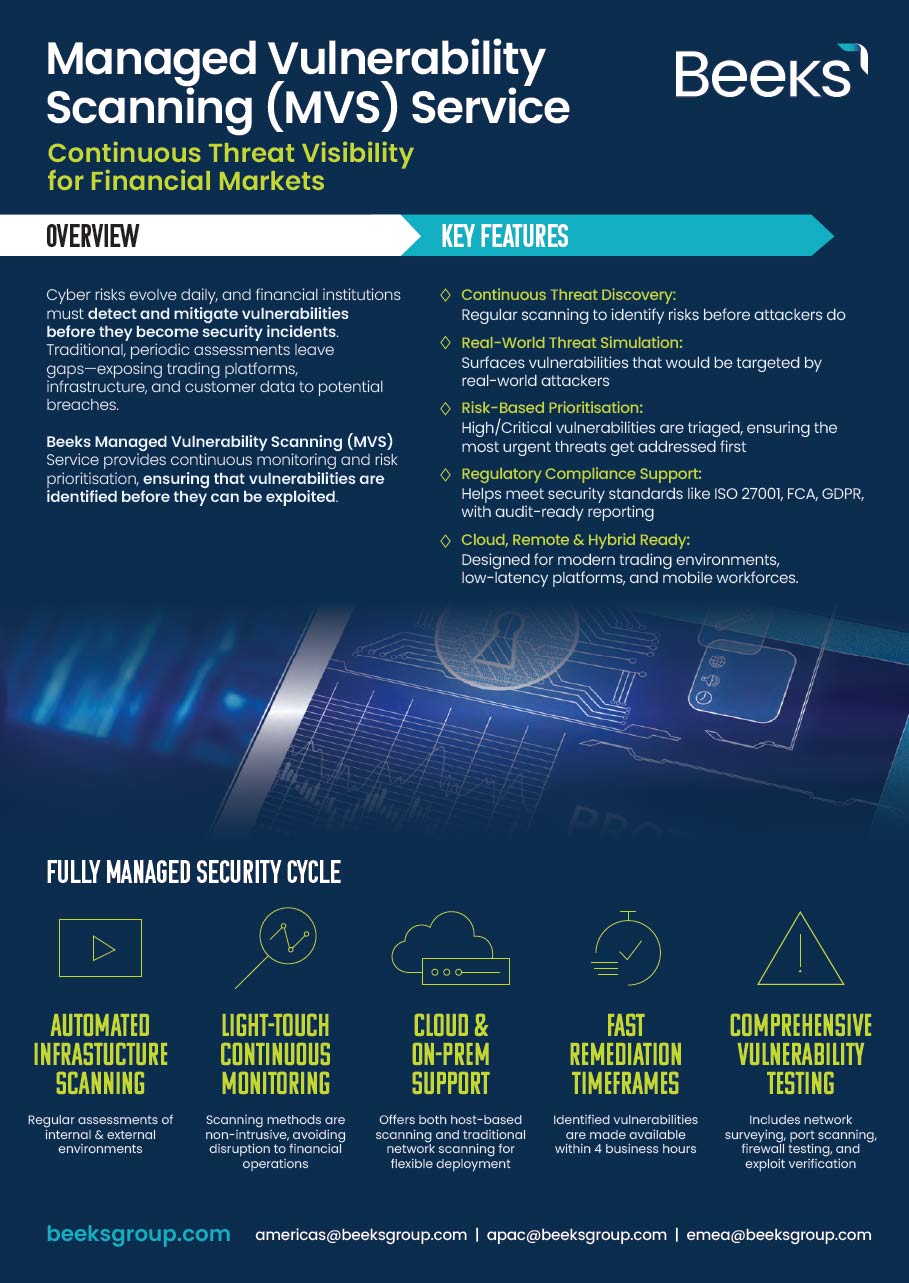
The firms getting this right are treating patch management less like a one-off IT task and more like a continuous operational discipline. Automated vulnerability scanning, defined SLAs by severity level (critical patches in 72 hours, not 72 days), regular tabletop exercises, and genuine senior sponsorship to push through the organisational friction.
The bottom line
The good news is that the vast majority of successful cyberattacks don’t exploit exotic vulnerabilities. They exploit the gap between “patch released” and “patch applied.” Close that gap, and you eliminate a huge swathe of your attack surface.
The bad news is that in capital markets, closing that gap requires fighting against operational unwillingness, complex change management processes, and the very real cost of downtime. That fight is worth having. The alternative, as many financial markets companies have found, is significantly worse.
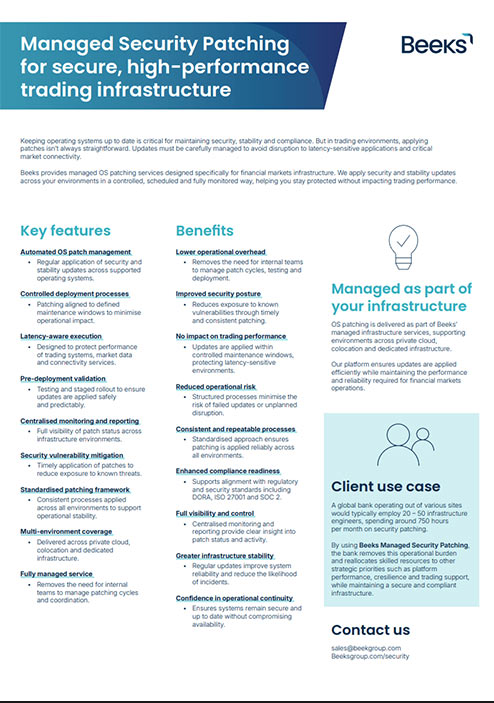
If staying on top of patching feels like a constant battle, you’re not alone and you don’t have to fight it yourself. Beeks’ managed security patching service takes the operational burden off your team, ensuring your infrastructure stays current, compliant, and protected without disrupting your trading environment.